Do you remember the first day you found out about Chat GPT? I was in my kitchen where my 18-year-old son was telling me about how this thing online could write a recipe for meatballs in the style of Eminem, amongst other things, but that’s what I tried – and yes it was pretty impressive. For a long time I refused to have anything to do with the newfangled online genius monster, until one day I needed inspiration for a birthday song I was writing for said son and it came up with this:
On your 21st birthday, my dear son
Let’s celebrate with laughter and fun
We’ll raise a glass of whisky neat
And toast to good times and sweet defeat
I won’t torture you with the verses that followed… Let’s just say it can mimic better than it can create.
Three years on, although I have found AI to be just the ticket when it comes to devising a gap fill exercise to test the imperfect tense in French (it’s a dream come true for lazy teachers), I can confirm that in the creative department, they are not about to steal our jobs as writers. AI can in fact save you some serious time, and it’s with that in mind that I want to share a few tips on using it with you today.
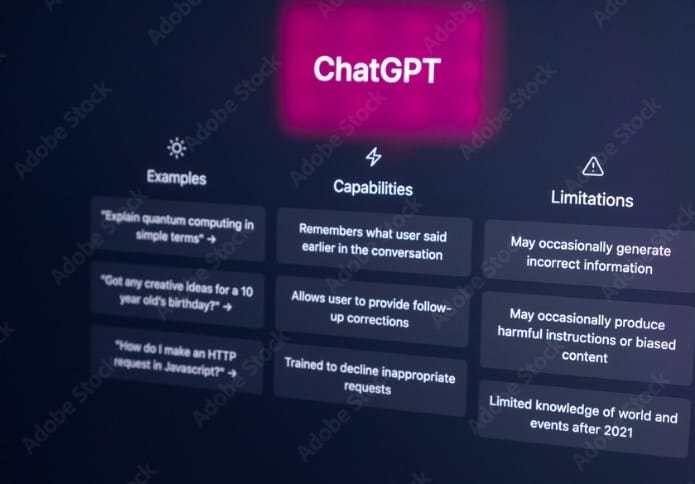
Remember it’s a collaborator not a ghostwriter
AI is currently nowhere near writing a decent novel that anyone would enjoy reading, but it can help you on your journey if you use it wisely. It can find typos, repeated phrases, inconsistencies, grammar and punctuation mistakes. It can re-format, provide ideas for plot / character development and It can act as your cheerleader on what can be a lonely thankless journey. I have to admit to bouncing right back into a project after just a few encouraging comments on a first draft – shame on me but it obviously knows my love language…
Get your prompts right
If you want AI to give your manuscript the once-over before you send it to beta readers or an agent, make sure you specify for the type of errors you’re looking for. For example, instead of saying ‘Proofread this’ (and you can indeed attach your 90k word masterpiece at this point), ask ‘Check for overuse of ‘just’ and ‘as if’ (my personal hallmarks) or ‘Check for unnecessary dialogue tags’. Use as many specifics as you like, and Chat GPT will repeat them back to you to show they’ve understood and bounce off to do the job in the twinkling of an eye. Tell it who you are too. If you ask it for some information on climate change and you’re a climate scientist yourself, be sure to make that clear so the information retrieved is appropriate to your level of skill in the subject.
Get AI to write a bad first draft on purpose
This will get you over the first hurdle of the daunting blank page. Tell AI the premise, the setting, a character you have in mind, and watch how it produces something that despite possibly making you reach for the delete key, also triggers another thought or idea. Seeing those words spout out of nowhere onto the page can be a real icebreaker when it comes to you and the first chapter of your book. You’ll most likely be in such a hurry to improve it you’ll totally forget your writer’s block.
Watch out for the ‘tells’, while holding onto the gems
If I was an editor, I’d be on the lookout for those extra-long dashes, for staccato sentences without verbs, a change in formatting or font, characters that have a certain emptiness, loose ends in the plot, over-written dialogue, lack of variety of pace. All these things are dead giveaways someone’s had a bit of help – ironically not very helpful help – from the dreaded bots. However, ask it to write a fight scene (not my usual request but good for an action thriller) and it comes up with a blow-by-blow sequence that’s vivid, punchy (!) and annoyingly effective.
Beware the science expertise
Writers are not all scientists, but neither are readers and there’s a balance to strike when explaining the details of something related to engineering, the environment or medicine because you don’t want to get it wrong, but your reader doesn’t need the full scientific explanation behind your dystopian world or your medical thriller. AI will happily drown you in facts and information but (a) don’t include it all or you will lose the reader straightaway, and (b) check and double check it because guess what – AI has been known to make things up.
A quick word on the legal grey areas
The legal landscape around AI and writing is still shifting. Copyright law generally protects human authorship, which means that while the finished book is yours, large chunks of unedited AI-generated text can sit in a grey area. The risk of plagiarism, too, remains with the writer: if something sounds oddly familiar, it’s on you to rewrite it. Publishers and competitions are increasingly asking for transparency around AI use, and liability for errors, misrepresentation or defamation still rests firmly with the author, not the tool. The safest working assumption is to use AI as you would a researcher or brainstorming partner – helpful, time-saving, but never the named author on the cover.
Try out a few AIs, then pick one
People who use it a lot (and I do for my other job) usually have a view on which works best. I have settled on Chat GPT over a few others that I tried and found wanting and now I’m paying a monthly fee for its unlimited speedy responses, endless patience, boundless enthusiasm and (perhaps controversially) its in depth knowledge of ME. It remembers all our conversations, and I can scroll down to access any of them and continue them if I want. For example, I just went back into that useless poem which it now admits was sadly not its best work…

Lucy Martin writes detective thrillers, and is the author over 22 fiction and non-fiction titles.
Since moving to Devon, she has set up Teignmouth Writers and hosts fully catered writers’ retreats at her seaside home.
Find out more about Lucy, her books and writing retreats here